Enercept Structural Insulated Panels are engineered to create a tighter, more energy-efficient building envelope from the start. Their sustainability benefits extend across materials, construction, and long-term performance.
Responsible Material Use
Enercept SIPs use oriented strand board (OSB) facings that require less lumber than traditional stick framing. OSB is manufactured from fast-growing, sustainably managed trees cultivated on tree farms, helping maintain healthy forest cycles while maximizing resource efficiency.
High-Performance Insulation
Enercept panels use expanded polystyrene (EPS) as a continuous insulating core. This design:
- Creates an exceptionally airtight envelope
- Dramatically reduces thermal bridging
- Maintains consistent indoor temperatures
- Cuts long-term heating and cooling demand
The result: homes and commercial buildings that consume significantly less energy year after year.
Manufacturing Efficiency & Recycling
Sustainability extends beyond the finished structure:
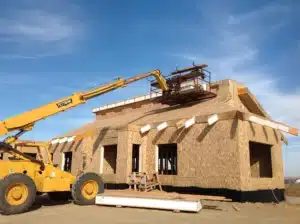
- Scrap wood and EPS are recycled and repurposed
- Prefabrication reduces jobsite waste
- Many SIP projects require little to no roll-off dumpster usage
Less landfill waste means lower environmental impact before the building is even occupied.
Major Energy Savings
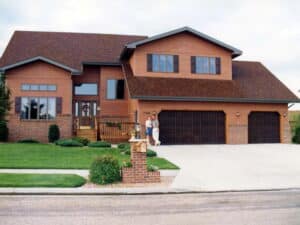
SIP buildings are up to 60% more energy efficient than conventional framing. Lower energy demand directly translates into reduced greenhouse-gas emissions over the life of the building.
Earth Day and the Role of High-Performance Envelopes
Modern Earth Day campaigns consistently highlight building efficiency as climate action. Every kilowatt-hour saved through better insulation, airtight construction, and reduced thermal loss contributes to long-term carbon reduction.
Frank Lloyd Wright once noted:
“The best friend of earth and man is the tree. When we use the tree respectfully and economically, we have one of the greatest resources on the earth.” — Frank Lloyd Wright
SIPs align with that philosophy by using wood efficiently while maximizing performance.
Building Toward Passive House and Net-Zero
Because SIPs create a continuous, airtight shell, they are ideal for Passive House and Net-Zero Energy construction strategies—two approaches gaining momentum as municipalities and builders pursue lower-carbon building standards.
A notable example is the University Classroom Building at University of Minnesota Duluth, built to Passive House standards and recognized among the AIA Committee on the Environment Top Ten Green Projects by the American Institute of Architects.
Projects like this demonstrate how advanced building envelopes translate directly into measurable environmental performance.
Build Better. Build for the Future.
Earth Day reminds us that sustainability is not a single day of action—it is a long-term commitment expressed through everyday decisions. For builders, architects, and homeowners, the choice of building envelope is one of the most impactful decisions possible.
Choosing SIPs means:
- Lower lifetime energy consumption
- Reduced carbon emissions
- Less construction waste
- More comfortable, durable buildings
This Earth Day, the connection is clear: better building equals a better planet.